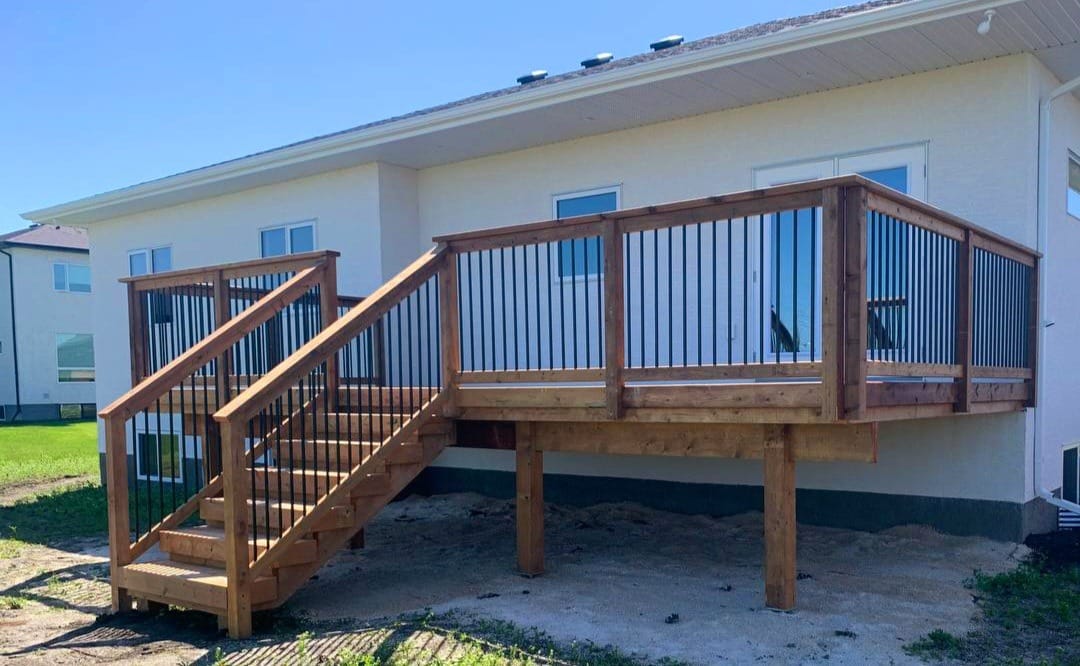
Trex composite decking generally outlasts wood and needs a lot less upkeep, but pressure-treated wood costs less upfront and gives you that classic natural look. Which one makes sense for your home really comes down to your budget, how much maintenance you want to take on, and how long you want the deck to last. Let's break down what each material delivers once Manitoba weather gets involved:
Manitoba winters aren't gentle on outdoor structures. Deck boards here go through repeated freeze-thaw cycles every year. The moisture in the wood freezes, expands, then thaws again as temperatures swing. That cycle puts real stress on materials, and it's a big part of why some decks age faster than others.
On top of the cold, Winnipeg homeowners deal with heavy snow loads, spring moisture, intense summer sun, and UV exposure that fades and dries out surfaces over the warmer months. Snow sitting on a deck for weeks at a time means boards need to handle prolonged moisture without warping, cupping, or rotting. UV rays bleach and weaken less durable materials, and the freeze-thaw cycle can loosen fasteners and create small cracks that get worse year after year.
This combination of weather conditions is exactly why deck construction in Winnipeg calls for materials that can withstand more than a typical mild-climate build. Some materials are simply built to handle these conditions better than others, which brings us to the two main options most homeowners weigh: Composite and wood.
Trex composite decking is made from a mix of recycled wood fibres and recycled plastic, engineered to look like real wood but without a lot of the maintenance that comes with it.
Pros:
Cons:
For many homeowners, the long-term durability and low-maintenance decking benefits outweigh the higher initial investment.
Pressure-treated wood remains one of the most popular choices for new deck builds. Cedar is another option some homeowners go with for its richer colour and natural resistance to insects, though it tends to come at a higher price point.
Pros:
Cons:
When you're comparing Trex vs. wood decks in Winnipeg on price alone, wood wins upfront. Pressure-treated wood costs less per square foot installed, so a new wood deck typically comes in cheaper than an equivalent composite build.
But that number doesn't tell the whole story; wood needs regular staining, sealing, and occasional sanding, and those costs add up. Boards also crack, rot, or warp over time, leading to repairs or a full refinish within a decade. In some cases, enough boards fail that a full rebuild makes more sense than patching it together.
Trex composite decking costs more initially, but it carries far less repair and replacement risk over a 15- to 25-year span. Less spent on maintenance and replacement boards over time can offset that higher purchase price, particularly for homeowners planning to stay long-term.
Manitoba winters are tough on decks. Freeze-thaw cycles, heavy snow, and big swings in humidity put real pressure on outdoor surfaces, and not every material holds up the same way.
Wood needs consistent care to survive that cycle. Staining and sealing every couple of years, regular cleaning to prevent mould, and close attention to boards that start cupping or splitting after a hard winter. Skip the upkeep, and you're looking at repairs or a rebuild sooner than expected.
Trex composite decking is built for exactly these conditions; it barely absorbs moisture, so freeze-thaw cycles have little effect on the boards. It also resists UV fading, won't rot or splinter, and most Trex products offer good slip resistance, which matters on icy Winnipeg mornings. For a deck that holds up to our winters without constant intervention, composite clearly has the edge.
There's no single right answer here. It depends on what matters most to you.
Whatever you land on, the right contractor will help you weigh these trade-offs against your outdoor living plans rather than push you toward whichever material is easiest to install.
KMA Building is a TrexPro Gold Deck Builder in Winnipeg. That certification comes straight from Trex, and it means our team knows its full product lineup inside and out, not just the basics.
That knowledge shows up in the install. Spacing, ventilation, and fastening all affect how a composite deck holds up over time, and we get those details right the first time. No guesswork, no shortcuts.
It also means stronger warranty coverage. Decks installed by a TrexPro Gold builder typically qualify for better manufacturer protection than a standard install, so you're covered well beyond the basics.
Add decades of combined carpentry experience and a long list of completed projects across Winnipeg, and you've got a team that knows exactly what holds up here and what doesn't.
If you're ready to move forward with composite decks in Winnipeg or want to talk through your options for wood decks in Winnipeg, our team is here to help you plan a deck that fits your home, your budget, and our climate. Reach out to our experienced deck builders in Winnipeg to get your project started with absolute confidence.
Yes, for most homeowners. Trex composite decking resists moisture, fading, and freeze-thaw damage better than wood, which makes it a strong long-term investment for Manitoba's weather.
Generally yes. Wood needs regular staining, sealing, and occasional sanding to stay in good shape, while composite decking mainly needs simple cleaning.
Trex composite decking typically lasts longer than pressure-treated wood, particularly when wood maintenance gets skipped or delayed over the years.
Composite decking generally performs better in these conditions since it resists moisture absorption, won't rot, and holds up well through repeated freeze-thaw cycles.